
From POC to product: how we de-risk digital product development
12 May 2026 · Ekinsol
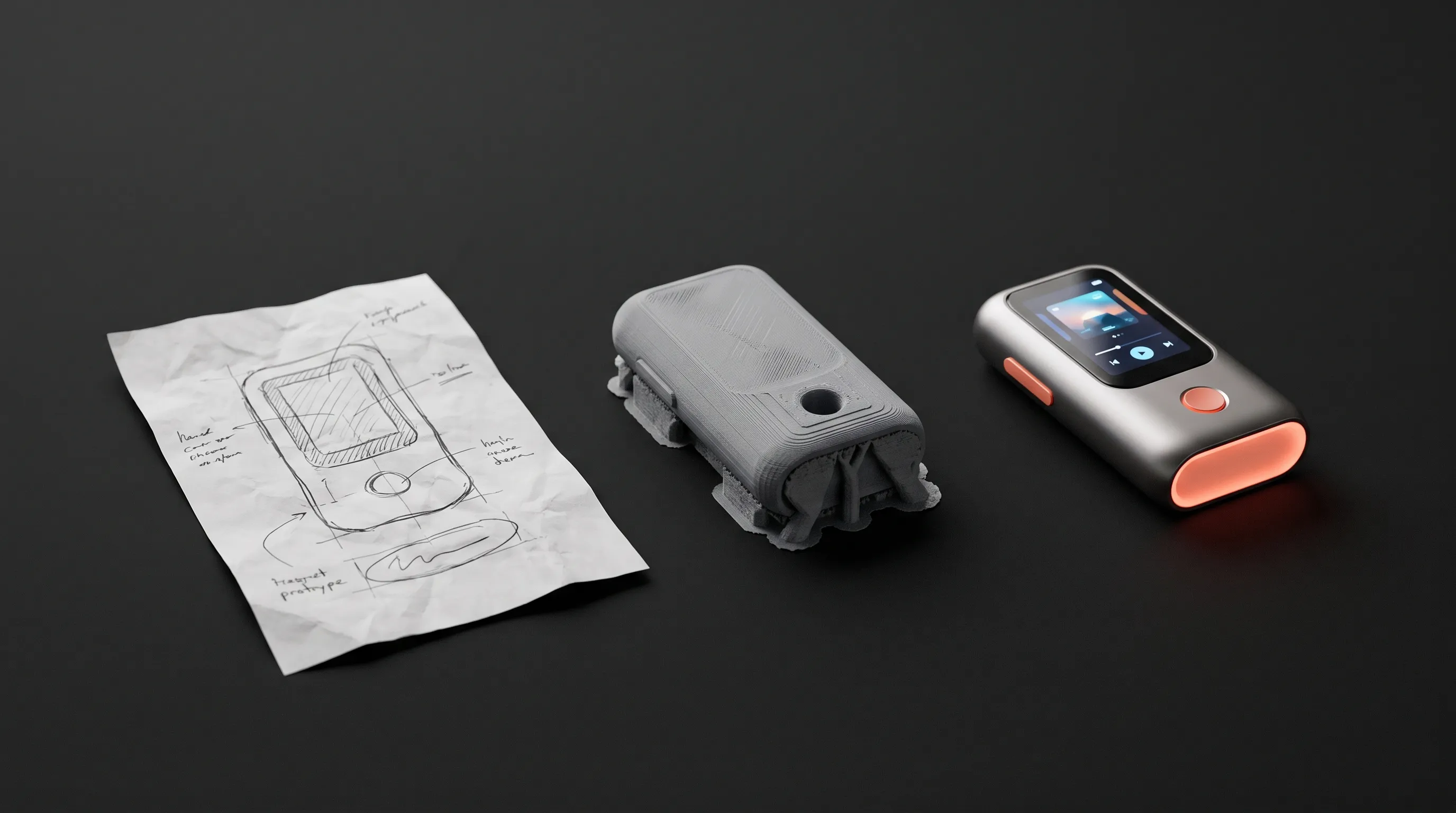
Most digital products don’t fail in production. They fail earlier, in the gap between a promising idea and a validated plan. Budgets get committed to full builds before anyone has proven the core assumption, and by the time reality pushes back, there’s too much sunk cost to change course.
At Ekinsol we structure every engagement around three checkpoints: Proof of Concept, Prototype, Product. Each one answers a different question, and each one is a deliberate decision point where you can stop, pivot or double down, with evidence on the table instead of opinions.
Proof of Concept: “Can it work?”
A POC is the cheapest possible answer to the riskiest question in your project. Can we read the sensor data reliably? Can the algorithm handle real-world volumes? Can two legacy systems actually talk to each other?
We strip away everything else (no design, no polish, no edge cases) and attack the single assumption that would kill the project if it turned out to be false. A POC that fails is a success: it just saved you the cost of a full build.
Prototype: “Should it work this way?”
Once the technology is proven, the question shifts from feasibility to fit. A prototype puts something clickable, testable and demo-able in the hands of real users. This is where workflows get challenged, screens get redrawn, and the feature list gets shorter and sharper.
Prototypes also do something underrated: they align stakeholders. A working demo ends more debates than any specification document ever will.
Product: “Make it last”
Only now do we engineer for production: clean architecture, automated testing, monitoring, documentation, and a deployment pipeline. Because the risky questions were answered in the POC and prototype phases, this phase is predictable: the expensive engineering happens on validated ground.
Why this matters for your budget
The POC-to-product workflow front-loads learning and back-loads spending. You invest small amounts while uncertainty is high, and commit serious budget only when the unknowns are resolved. In our experience that’s the single biggest difference between products that ship and products that stall.
Curious where your idea sits on that path? Let’s have a conversation. We’ll tell you honestly whether you need a POC, a prototype, or neither.
Working on something in this space? This is exactly what our Digital Product Development service is for.